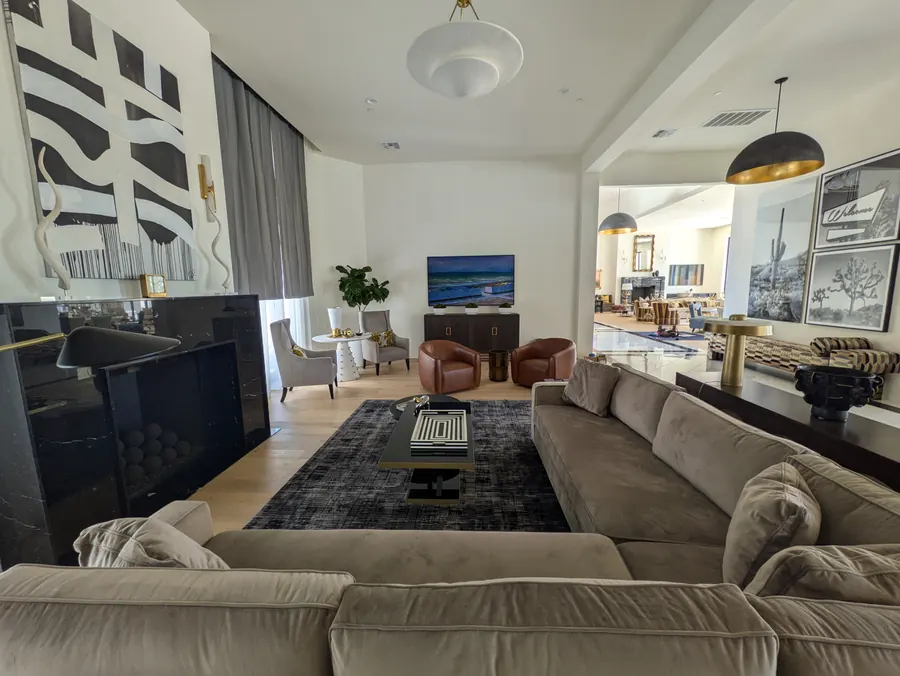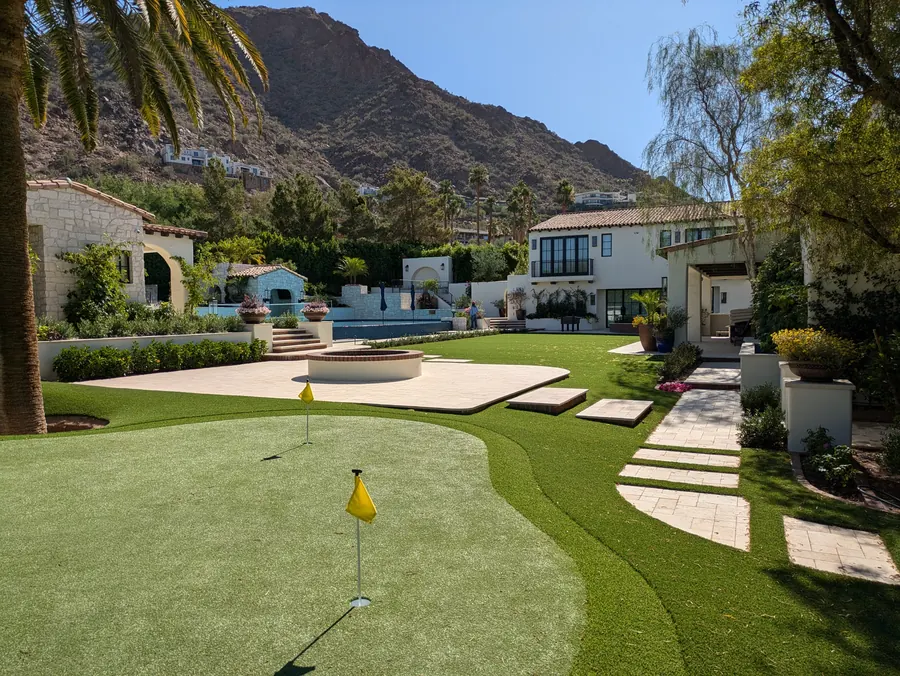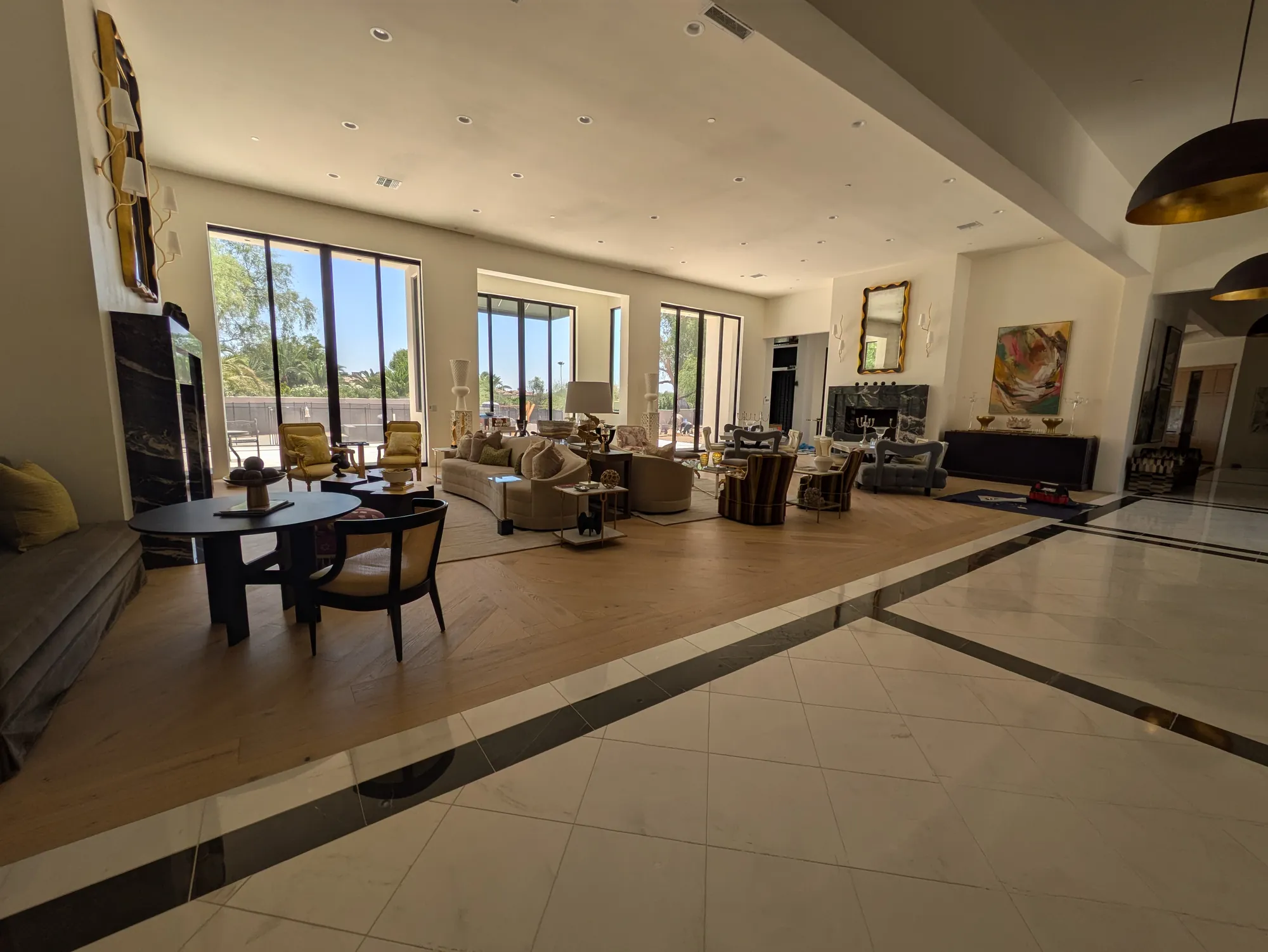
Phoenix homes are built around views: big glass, sliding walls and patios that open to the mountains. Then summer arrives, and that same glass lets in heat and glare for months on end.
Motorized shades are one of the most effective upgrades for a desert home, and the real benefit comes when they stop being something you have to remember.
Shades that follow the sun
A smart shade system knows where the sun is at every hour of the year. West-facing shades can lower in the early afternoon before the heat hits, then rise again in the evening so you get the sunset. East-facing rooms can do the reverse. You set the plan once and the house runs it every day.
Choose the right fabric
Not every shade is meant to block the view. Solar screen fabrics cut heat and glare while keeping the mountains visible, which makes them a favorite for great rooms and kitchens. Blackout fabrics belong in bedrooms and theaters. Many rooms do best with both, on two separate motors.
Tie shades to the thermostat
When shades and climate control talk to each other, the house can make better choices. On a 115 degree afternoon, shades can close in empty rooms to keep heat out. When you leave for the summer, an "Away" scene can keep shades down and the temperature set where it protects the home without wasting energy.
Do not forget the outdoor spaces
Motorized exterior screens on patios and casitas can block sun, wind and bugs, and they can drop automatically on a schedule. Pair them with misters, fans and outdoor lighting and the patio becomes usable for more of the year.
Shades are a natural first project because they make a difference on day one. Book a walkthrough and we will look at your windows, the sun and how you use each room.